
The Effective Checklist for Health News: How to Navigate the Sea of Medical Headlines
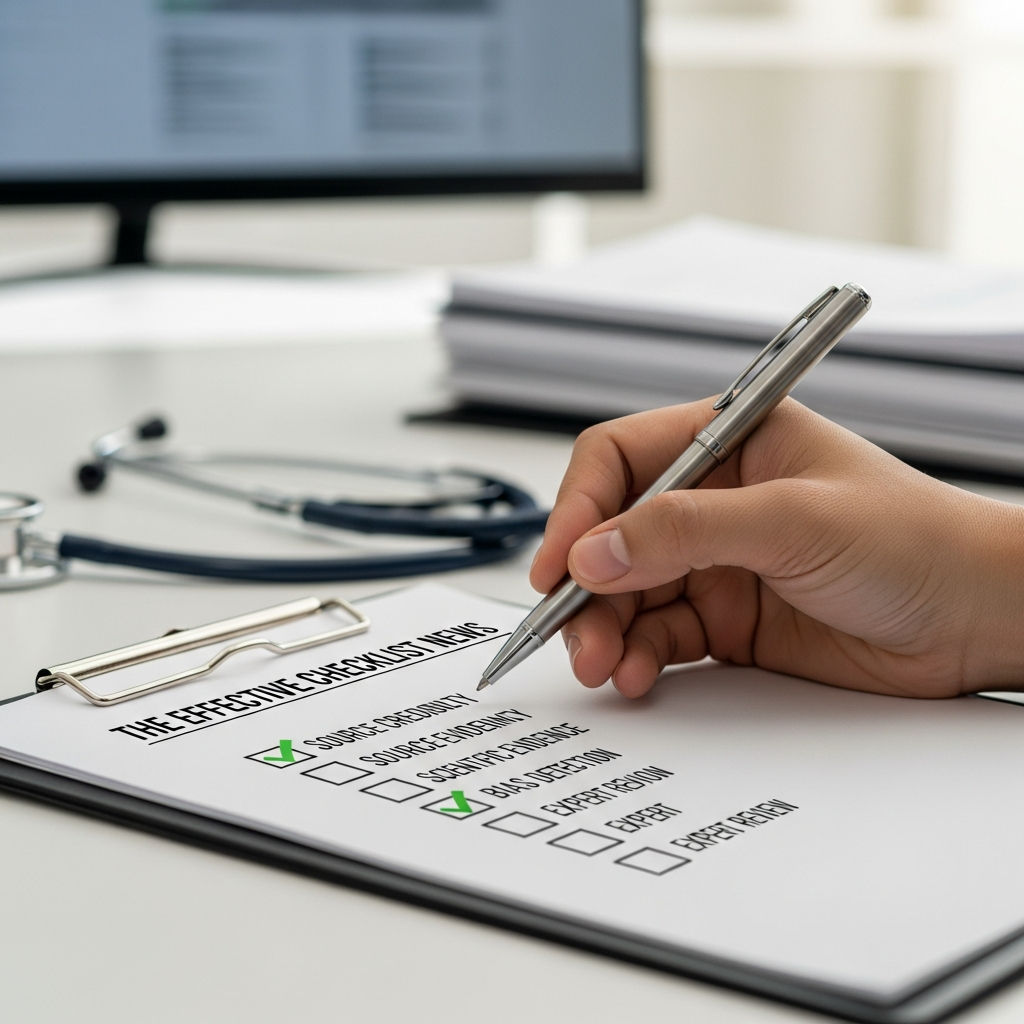
“`html
The Effective Checklist for Health News: How to Navigate the Sea of Medical Headlines
In the digital age, we are bombarded with health news headlines every few minutes. From “miracle cures” found in common household spices to “hidden dangers” in everyday foods, the sheer volume of medical information can be overwhelming. While some reports are based on groundbreaking science, others are sensationalized, misinterpreted, or based on preliminary findings that haven’t been proven in humans.
Misinterpreting health news can lead to unnecessary anxiety, wasted money on ineffective supplements, or, in the worst cases, dangerous changes to medical treatments. Developing a high level of health literacy is essential. This article provides an effective checklist for health news, empowering you to separate scientific fact from journalistic fiction.
1. Trace the Source: Where Is the Information Coming From?
The first step in evaluating any health claim is identifying its origin. A reputable news outlet is a good start, but it shouldn’t be your final destination. You must determine if the news is based on a peer-reviewed study or if it is merely an anecdotal report.
- Peer-Reviewed Journals: Look for mentions of prestigious journals like The Lancet, The New England Journal of Medicine (NEJM), or JAMA. Peer review means other experts in the field have vetted the study for methodology and accuracy.
- Press Releases: Many news stories are rewritten from university or pharmaceutical press releases. These are designed to promote research and may omit limitations.
- Expert Quotes: Does the article quote independent experts not involved in the study? If the only “expert” quoted is the one who conducted the research, you are only getting one side of the story.
2. Evaluate the Study Type: Not All Research Is Equal
The “hierarchy of evidence” is a critical concept in medical science. Some study designs are inherently more reliable than others. When reading health news, check where the research falls on this ladder:
- Randomized Controlled Trials (RCTs): This is the “gold standard.” Participants are randomly assigned to a treatment or a control group. This helps ensure that the results are actually caused by the treatment being studied.
- Observational Studies: These look at large groups of people over time (e.g., people who drink coffee vs. those who don’t). While useful, they can only show links, not direct cause and effect.
- Animal and In-Vitro Studies: Research done on mice or in Petri dishes (in-vitro) is preliminary. Humans are biological systems far more complex than a mouse, and many “miracle” results in labs fail to translate to the human body.
3. Check the Sample Size: Does “n” Matter?
In scientific research, the letter “n” represents the number of participants. A study with an “n” of 10 people is far less reliable than a study with an “n” of 10,000. Small sample sizes are prone to “statistical noise,” meaning the results could have happened by pure chance. If a headline claims a breakthrough but the study only involved 15 people, take the findings with a significant grain of salt.
4. Correlation Does Not Equal Causation
This is perhaps the most common trap in health journalism. If a study finds that people who eat more blueberries have lower rates of heart disease, it does not necessarily mean that blueberries prevent heart disease. It could mean that blueberry eaters also exercise more, smoke less, or have higher incomes—all of which contribute to heart health. Unless it is a well-designed RCT, a “link” or “association” is just a clue, not a proven cause.
5. Understand Absolute vs. Relative Risk
Headlines love to use “relative risk” because it sounds more dramatic. For example, a headline might scream, “Eating Processed Meat Increases Cancer Risk by 20%!” This sounds terrifying. However, you must look at the absolute risk to understand the true impact.
If your baseline risk of getting a specific cancer is 5 in 100, a 20% increase moves that risk to 6 in 100. While the “20% increase” is mathematically true, your actual risk only moved by 1%. Always ask: “What is the baseline risk, and how much does this actually change it in real-world terms?”
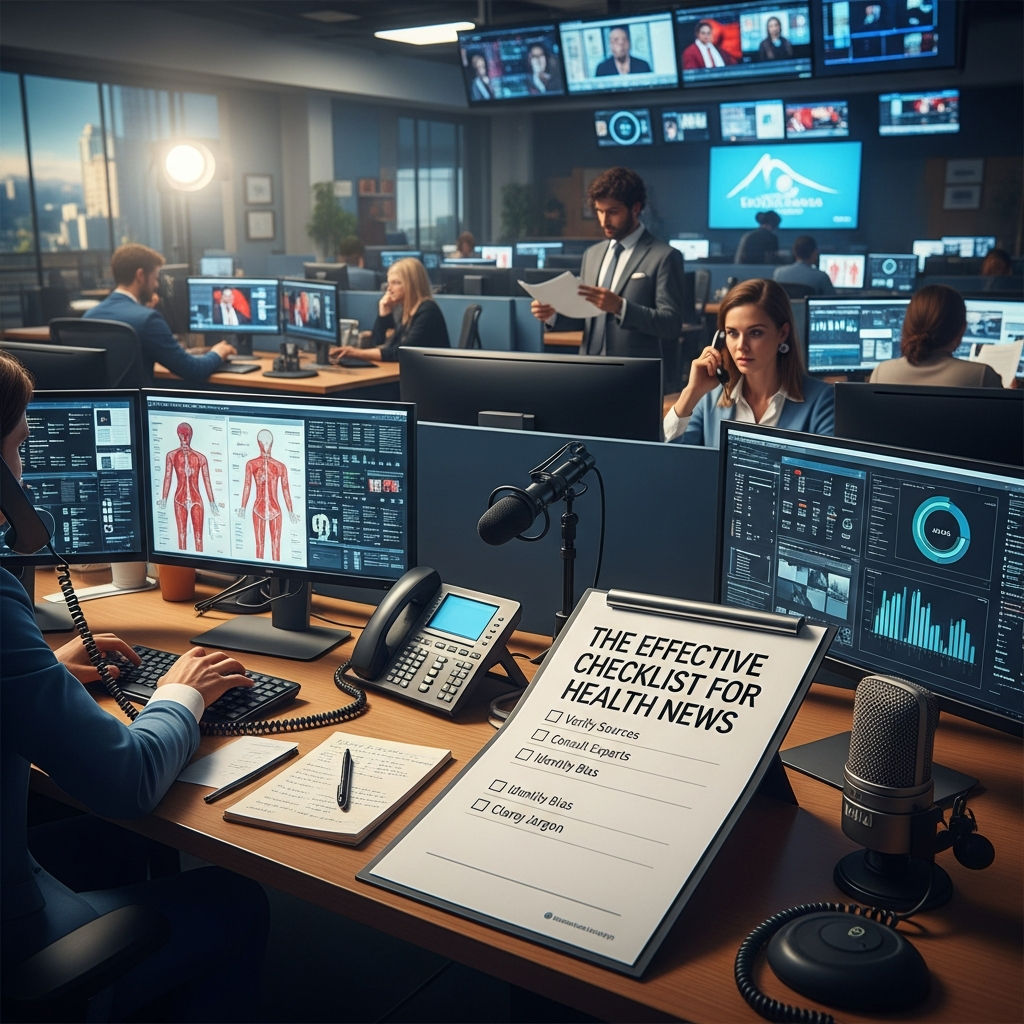
6. Follow the Money: Conflicts of Interest
Science is expensive, and someone has to pay for it. While industry-funded research isn’t always biased, it is a factor you must consider. If a study claiming that dark chocolate improves cognitive function was funded by a major chocolate manufacturer, the researchers may have a (conscious or unconscious) bias toward reporting positive results. Reliable health news should disclose who funded the research and whether the lead authors have any financial ties to the industry being studied.
7. Look for “The Big Picture” Context
Science is a slow, cumulative process. A single new study rarely overturns decades of established medical consensus. If a new report contradicts everything we know about nutrition or medicine, it requires an extraordinary amount of evidence. Effective health news should place the new findings in the context of existing research. Does this study support what we already know, or is it a “lone wolf” finding that needs further replication?
8. The “So What?” Factor: Real-World Application
Sometimes a study shows a “statistically significant” result that has zero “clinical significance.” For example, a new drug might lower blood pressure by a statistically significant margin, but if that margin is only 1 point, it won’t actually improve a patient’s health outcomes. Ask yourself: Does this change how I should live my life, or is it just an interesting data point for scientists to explore further?
The Quick Health News Checklist (Summary)
Before you share that viral health article or change your diet based on a headline, run it through this quick checklist:
- Is the source a peer-reviewed medical journal? (High points for Yes)
- Was the study conducted on humans? (Animal studies are preliminary)
- Was the sample size large? (Hundreds or thousands vs. dozens)
- Is the article claiming “cause” or just a “link”? (Beware of causal claims in observational studies)
- Are the risks reported in absolute or relative terms? (Look for the actual numbers)
- Who funded the study? (Check for potential conflicts of interest)
- Does this study align with existing science? (Be skeptical of “miracle” breakthroughs)
Conclusion: Be Your Own Fact-Checker
The goal of the effective checklist for health news isn’t to make you cynical about science, but to make you a more discerning consumer. Science is the best tool we have for understanding our health, but the way science is communicated to the public is often flawed.
By asking these critical questions, you protect yourself from the “whiplash” of contradictory health headlines. The next time you see a sensational health claim, remember to look past the clickbait, find the data, and consult with your healthcare provider before making significant changes to your wellness routine. Health literacy is your best defense in an era of information overload.
“`