
Mastering Health News: A 23-Day Guide to Scientific Literacy
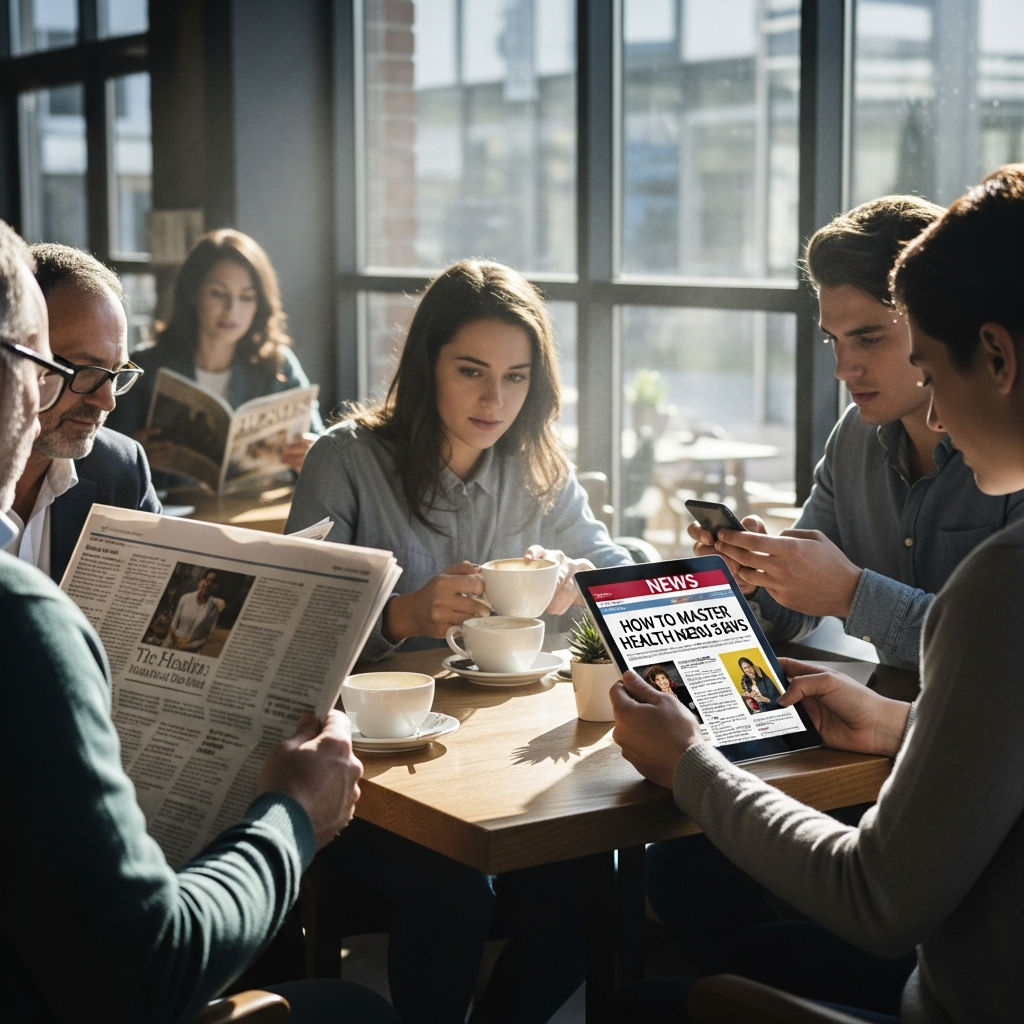
Mastering Health News: A 23-Day Guide to Scientific Literacy
In an era where “miracle cures” and “toxic ingredient” alerts go viral in seconds, the ability to discern fact from sensationalism is a vital life skill. Navigating the landscape of health news is no longer just about reading the headlines; it is about developing a critical filter that separates evidence-based science from profit-driven marketing. Whether you are managing a chronic condition or simply trying to optimize your wellness, mastering health news is the key to making informed decisions.
This comprehensive 23-day roadmap is designed to transform you from a passive consumer of information into a sophisticated health news analyst. By the end of this period, you will have the tools to evaluate study designs, identify bias, and understand the nuance behind medical breakthroughs.
Phase 1: Building Your Foundation (Days 1–7)
The first week is about auditing your current information diet and establishing a baseline of credible sources. Before you can analyze a study, you must know where the most reliable information originates.
Day 1–3: Identifying Credible Sources
Start by clearing your social media feeds of “wellness influencers” who lack medical credentials. Replace them with institutional giants. Focus your attention on:
- Government health agencies (CDC, NIH, NHS).
- Renowned academic medical centers (Mayo Clinic, Johns Hopkins, Harvard Health).
- Peer-reviewed journals (The Lancet, JAMA, New England Journal of Medicine).
Day 4–5: Understanding the Hierarchy of Evidence
Not all “science” is created equal. On these days, learn the “Evidence Pyramid.” A single case study or an animal trial (in vitro) is at the bottom. At the top are Systematic Reviews and Meta-Analyses, which look at dozens of studies to find a consensus. If a news report is based on a study of ten mice, its relevance to your daily life is minimal.
Day 6–7: Decoding Medical Jargon
Spend time learning basic terms that frequently appear in health news. Understand the difference between “absolute risk” and “relative risk.” For example, a headline might scream that a food “doubles your risk” of a disease (relative risk), but if the original risk was 1 in 1,000,000, the new risk is still only 2 in 1,000,000 (absolute risk).
Phase 2: Developing a Critical Lens (Days 8–14)
Now that you know where to look, you must learn how to look. This week focuses on the mechanics of health reporting and the red flags that signal low-quality information.
Day 8–10: The Correlation vs. Causation Trap
This is the most common error in health journalism. Just because two things happen at the same time doesn’t mean one caused the other. For instance, people who carry lighters are more likely to get lung cancer, but the lighter doesn’t cause the cancer—smoking does. When you see a headline saying “X is linked to Y,” look for whether the study was observational or a randomized controlled trial (RCT).
Day 11–12: Check the Sample Size and Duration
A study on weight loss that lasts only two weeks or includes only 15 participants is not a reliable basis for a lifestyle change. Mastery of health news requires looking for “robust” data—studies with hundreds or thousands of participants over several years.
Day 13–14: Identifying Funding and Conflicts of Interest
Always ask: “Who paid for this?” If a study claiming that sugar isn’t harmful is funded by the soft drink industry, the results must be viewed with extreme skepticism. Reliable health news outlets will disclose funding sources; if they don’t, you should find the original study and check the “Conflicts of Interest” section.
Phase 3: Synthesis and Application (Days 15–21)
By the third week, you are ready to synthesize complex information and understand why health advice seems to change so frequently.
Day 15–17: Why “The Science” Changes
Newcomers to health news often get frustrated when advice shifts (e.g., the changing stance on dietary cholesterol). Mastery involves understanding that science is a process, not a destination. As technology improves and more data is collected, our understanding evolves. This isn’t “flip-flopping”; it’s the scientific method in action.
Day 18–19: Spotting “Clickbait” and Sensationalism
Journalists often write headlines to generate clicks, not to provide medical accuracy. Learn to ignore words like “Miracle,” “Cure,” “Secret,” and “Revolutionary.” If a health claim sounds too good to be true, it almost certainly is. Practice reading the full article—or better yet, the study abstract—before forming an opinion based on a headline.
Day 20–21: Navigating the Nutrition Wars
Nutrition is perhaps the most confusing area of health news. Use these days to study why nutrition science is difficult (it relies heavily on self-reported food diaries, which are notoriously inaccurate). Focus on finding consensus among multiple large-scale studies rather than individual “breakthrough” reports.
Phase 4: Sustaining Health Intelligence (Days 22–23)
The final two days are about turning these skills into a permanent habit and becoming a resource for others.
Day 22: Fact-Checking Like a Pro
Familiarize yourself with fact-checking websites that specialize in health, such as HealthFeedback.org or Snopes’ medical section. Practice taking a viral health claim and tracing it back to its original source to see if the data was misinterpreted along the way.
Day 23: Establishing a Weekly Review Habit
Mastery requires maintenance. Decide on one or two high-quality newsletters or podcasts (such as those from Science Friday or the BMJ) to follow weekly. This ensures you stay updated without being overwhelmed by the 24-hour news cycle.
Summary Checklist for Reliable Health News
To maintain your mastery beyond the 23 days, use this quick checklist whenever you encounter a new health story:
- Is the source reputable? (University or government-backed vs. a blog).
- Is it a human trial? (Be wary of results only seen in mice or cells).
- Is the sample size significant? (Look for hundreds, not dozens).
- Who funded the research? (Check for industry bias).
- Does it claim “causation” or just “association”? (Association is not proof).
- Is there a consensus? (One study rarely changes medical practice).
Conclusion
Mastering health news in 23 days is not about becoming a doctor; it is about becoming a critical thinker. The “infodemic” of modern times makes it easy to feel overwhelmed, but by following this roadmap, you build a mental framework that protects you from misinformation. When you control how you consume health news, you take the first step toward truly controlling your own health. Remember: real science is often slow, nuanced, and cautious. If the news you’re reading feels like a thriller, it’s probably not science—it’s entertainment.